

Competing effectively in today’s ever-changing global markets necessitates manufacturing firms to continually explore innovative production strategies, leveraging advanced digital technologies to enhance flexibility, productivity, quality, environmental sustainability, and cost efficiency. The advent of Industry 4.0 has facilitated the rapid evolution of digital technologies, helping to manage production complexity and enhance data-driven decision-making. However, despite the maturation of these technologies, their integration with other advanced production methods remains limited. Modern production paradigms must thus integrate complementary technologies to cover various facets of manufacturing decision-making.
Zero-defect manufacturing (ZDM) represents a disruptive approach that harnesses advanced digital technologies within quality, production, and maintenance management to elevate production performance. Rooted in strategies of detection, prevention, prediction, and repair, ZDM aims to eliminate defects, enhance product quality, and improve flexibility, and productivity, while also reducing costs and resource usage across industrial ecosystems.
The concept of zero defects traces back to 1965 with the US Army Pershing Missile System’s quality and reliability programme, which aimed to eliminate defects throughout manufacturing processes and supply chains. Building upon principles shared with Lean Production, Six Sigma, Theory of Constraints, and Total Quality Management, ZDM distinguishes itself by systematically applying strategies and technologies to shift from reactive to predictive and preventive quality management, aiming for a “first-time-right” quality level. Moreover, its emphasis on reliability fosters the development of predictive maintenance strategies to prevent errors and failures.
Over the past two decades, interest in ZDM has surged, leading to the development and implementation of various strategies, methods, and technologies, some of which you will read about in this publication. However, despite significant progress in scientific understanding, the practical implications of ZDM and its long-term impact on companies are still not fully realised and remain subject to R&D efforts and, at present, small-scale implementation and demonstration.
We looked at some of the most promising projects working in this sector and the different methodologies they are adopting, with some parallel and some novel approaches. In essence, however, all projects featured are focused on the following ZDM strategies, applying them across a variety of industries.
Detection: Involves identifying defects, anomalies, and faults through analysis and classification based on relevant parameters. While physical detection methods remain prevalent, virtual detection leveraging digital twins and AI is gaining traction due to increased data availability and lower costs.
Prediction: Focuses on forecasting defects, anomalies, and faults using mathematical modelling and AI techniques. However, accurate prediction models require substantial data, posing a significant challenge.
Prevention: Aims to proactively identify and address potential defects or deviations in manufacturing processes, often leveraging Failure Mode and Effect Analysis (FMEA), digital twins, and AI techniques.
Repair: Involves reworking or remanufacturing defective products within circular supply chains to minimise downtime and maximise production flow. With a growing focus on sustainability, repair strategies aim to accelerate repair times while minimising disruptions.
Defect mitigation or compensation: Seeks to reduce, rework and repair activities through proactive defect identification and compensation methods. By integrating product and process data and employing methodologies like stream-of-variation, downstream compensation actions can be generated to mitigate defects without offline rework.

The three main approaches to achieving ZDM
Approaches to the strategies for achieving Zero Defect Manufacturing can be classified into three main approaches:
- Stage-oriented: These approaches focus on optimising production processes at different stages, including single-stage, multi-stage, or supply chain levels. Single-stage optimisations have historically received significant attention by researchers, but they may not completely eliminate defects due to potential propagation through subsequent stages. Recent studies have shifted towards multi-stage systems, incorporating entire production lines and various processes. Examples include the utilisation of cyber-physical systems and collaborative production systems to minimise defects. Additionally, supply chain approaches leverage digital networks for information sharing and collaboration to enhance production performance and reduce defects.
- Process and product-centric: These approaches concentrate either on evaluating manufacturing processes or identifying defects in actual parts. Process-centric approaches focus on evaluating manufacturing equipment and controlling processes, often using statistical process control. Conversely, product-centric approaches aim to identify defects in parts and devise solutions to reduce them, regardless of the functionality of the machinery.
- People-centric: With the rise of Industry 5.0, there’s a growing emphasis on the importance of human expertise in manufacturing processes. Integrating human factors is crucial for reducing defects and enhancing production performance, despite the push for automation. However, the role of humans in ZDM has sometimes been overshadowed by process-oriented perspectives.
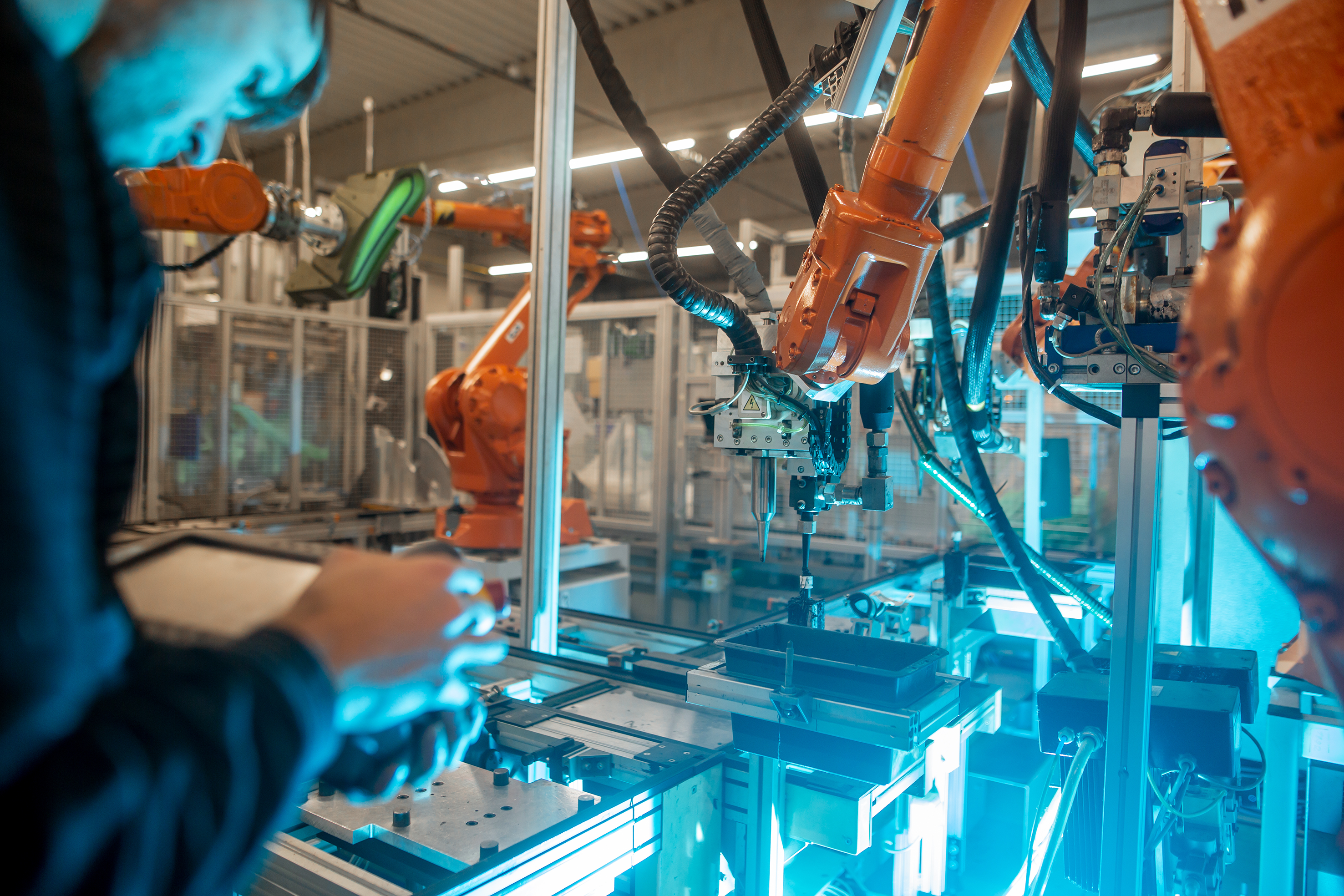
Advancements in Industry 4.0 have led to the development of technologies facilitating ZDM strategies. Recent studies have highlighted the evolution of these technologies. Through a comprehensive meta-analysis of contemporary literature reviews, the principal ZDM methodologies, technologies, and tools are outlined here:
- Artificial intelligence: Data-driven techniques for automated data analysis and decision making
- Big data analytics: Elaboration, analysis, and visualisation of massive industrial data
- Cyber-physical systems and digital solutions: Control strategies combining physical and digital resources
- Digital inspection and monitoring: Solutions for the measurement and monitoring of product and process resources
- Architecture and standards: Integration and communication protocols of industrial software
- Process mining: Providing a better understanding of process variations for improvement
- Failure mode and effect analysis: Approach for identifying possible failures in various processes
- Digital twin combined with simulation and modelling: Optimisation and decision support for processes
- Extended reality and visualisation technology: Visualisation of information to enhance decision-making processes.
Limitations identified in these existing ZDM approaches:
- Limited support for first-time-right and quality ramp-up minimisation, lacking pre-production assistance.
- Limited emphasis on automatic information collection and connectivity between machines to mitigate defects, as traditional quality control methods typically view production as static, overlooking crucial real-time data on machine states and process variables.
- Insufficient utilisation of AI for defect detection, leading to reliance on human experience rather than understanding the complex dynamics of root causes.
- Limited attention to “online” reworking and defect/waste compensation, with predominant reliance on offline strategies post-defect occurrence.
- Minimal consideration for implementing ZDM strategies in multistage systems or digital supply networks, primarily due to the complexity of traditional quality control tools.
- Inadequate focus on zero-waste value-chain strategies and environmental sustainability within quality improvement and control methods.
- Inadequate focus on feed-forward control, resulting from the absence of integrated multi-sensor software architecture, thus hindering proactive parameter regulation and control.
- Insufficient integration of human-in-the-loop approaches, neglecting operator involvement and support towards achieving zero defect.
Challenges and obstacles in implementing and applying zero-defect manufacturing
Currently, the primary hurdles in ZDM revolve around the insufficient knowledge and training necessary for implementing and applying ZDM strategies and methods. There is a pressing need to enhance awareness about ZDM across various sectors while ZDM might not receive adequate prioritisation, often with limited resource put in place for ZDM strategies and methods.
Furthermore, there is often apprehension regarding the overall level of digitalisation, despite robust IT infrastructures often being in place. There is a need for companies to invest in training and educational programmes to empower employees to proficiently utilise these digital technologies.
Meanwhile, companies often amass vast amounts of data without leveraging them for valuable insights or defect reduction purposes. Stronger integration of defect identification into feed-forward control within cyber-physical systems, which could mitigate the prevailing focus on multi-stage and digital network systems is, therefore, needed.
Sustainability issues are also critical, with a strong focus on environmental aspects like zero-waste value chains and social aspects such as human-in-the-loop systems, key to user uptake. However, empirical studies on sustainability issues within the realm of ZDM are notably scarce. Companies predominantly prioritise first-time-right and minimising quality ramp-up challenges. It’s imperative for academics and ZDM researchers to stay abreast of contemporary sustainability practices within companies and disseminate this knowledge across the broader community.
In conclusion, while ZDM offers promising avenues for enhancing production performance, there is still much to explore regarding its practical implementation and long-term impact on manufacturing companies. Integrating advanced digital technologies with robust production strategies remains critical for achieving sustainable development and minimising waste in manufacturing operations.