Composites play an important role in the EU’s manufacturing sectors, and are widely used in industries such as energy, aerospace and automotive. More than 2.4 MTons of composites are produced in Europe every year and their use is forecast to keep growing. As such, reducing waste when composites are processed by improving processing efficiency will play an important part in Europe’s transition towards climate neutrality.
Liquid resin infusion (LRI) is one of the most widely used composite manufacturing processes, accounting for about 33 per cent (792,000 tons a year) of how all composites are used in Europe today. The production of large parts, like airplane parts, ship decks and wind turbine blades, relies heavily on LRI, and the interest in this lay-up technique is growing notably as its production performance, efficiency, quality, time, and cost parameters are extremely competitive.
In LRI processes, a multi-layer fibre preform is placed on a mould and infused by liquid resin. Once the resin is cured, a finished part can be extracted. Despite the high value of the parts produced using this process, both material processing and quality control are still largely done manually, with the quality of the final product being almost totally determined by an experienced operator.
Defect identification is mainly based on visual inspection and other non-destructive testing methods that are used off-line to locate, identify, and measure internal flaws like voids, delamination or spots in the manufactured parts. These characterisation techniques are, in general, employed at the end of the manufacturing process on pre-assembled or finished parts, as a way to indicate the quality of the final product based on set parameters for that product and their compliance with pre-established technical specifications. Non-destructive quality control triggers what, if any, repairing actions are needed, while, if the defects detected are too severe, full products will be scrapped altogether, which happens in three per cent of cases.
In most cases when a composite product is manufactured using the LRI process, several reworking actions are needed during the process as well as repairs needed to the final product. Both these activities are usually complex and account for around 30 per cent of the total production time, which makes the whole process highly inefficient.
To overcome the lack of automated in-line control and to guarantee that the defects that do arise during the process are kept to a minimum and do not make their way into the final product, LRI manufacturing processes often use more materials than necessary. This is particularly the case with the quantity of resin used in the infusion process, resulting in an excessive amount of raw material used and waste generated at the finishing stage, when parts are trimmed and polished for example.
All these factors make the process inefficient and unsustainable. Consequently, the excess of materials used – the resin itself as well as the consumables needed for defect repairing – and the amount of rejected finished parts, lead to a huge amount of waste being generated. This waste cannot be reused and is hard to recycle.
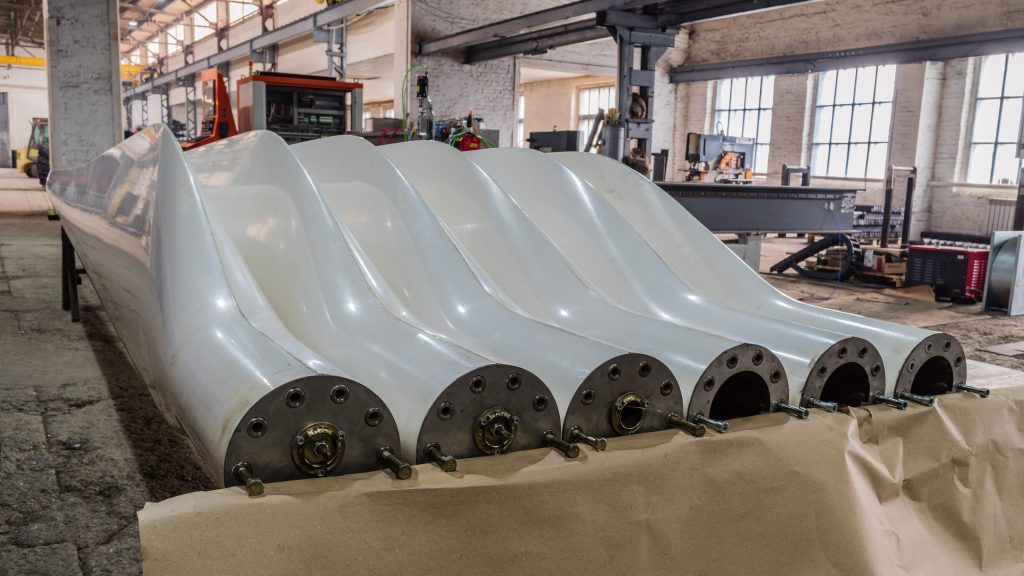
The amount of waste produced ranges from 135,432 to 372,240 tons every year and this has a significant environmental impact that is only set to grow as more LRI manufacturing processes are being used. Demand is growing across many sectors, like energy, for example, where there is increasing demand for longer offshore wind turbine blades, or in ship building, where lighter and more ecological crafts are being developed.
Controlling and reducing the generation of defects by adopting “first-time-right” manufacturing strategies based on novel in-line inspection and monitoring and advanced control strategies – the Zero Defect Manufacturing (ZDM) approach – is of great interest for LRI-based manufacturing process industries. It would allow the amount of material used to be better controlled and optimised, reduce the time needed for reworking and reduce the number of fully rejected parts and so decrease the main sources of waste generated in the process overall.
FLASH-COMP is a new Horizon Europe project starting next month with the very clear objective of providing industry with the digital solutions that will effectively help reduce this waste in this particular manufacturing process.
The project, which is coordinated by Lortek in Spain, plans to develop a fast and reliable (FLASH) human-oriented quality control solution that will identify defects in real time during the process and, also in real time, determine any corrective actions needed that can be implemented in-situ. This will help eliminate waste from LRI processing, while at the same time eliminate defects in finished products produced using the LRI manufacturing process, so significantly reducing the generation of polymer composite waste.
FLASH-COMP will employ novel, fast and accurate inspection and monitoring techniques (FLASH-IM) within the most critical manufacturing stages of LRI, pre-forming and infusion, to retrieve key process parameters. This data will feed an AI-based Defect Severity Estimation Tool (FLASH-DSET), capable of estimating the generation of defects and, consequently, determining if and what kind of corrective actions should be taken at the pre-forming and resin infusion stage of operations. Instructions will be linked to a real-time feedforward and feedback (FF/FB) control strategy Decision Support System (FLASH-DSS) which will allow workers to take instant and precise corrective actions, paving the way towards ‘first-time-right’ manufacturing with zero-defects and zero-waste.

Project Title:
FlashCOMP – Flawless and Human-centred digital approach for sustainable composite parts production
Project Objective:
To develop a fast and reliable (FLASH) human-oriented quality control solution capable of identifying in a timely-manner defectiveness during process and, consequently, to determine the in-situ corrective actions to be implemented, towards zero-defects LRI manufacturing process, significantly reducing the generation of polymer composites waste.
Project Duration and Timing:
42 months in total
October 1st 2022 to March 31st 2026
Project Funding:
Costs: €7.71 million
EC Funding: €5.88 million
Project Partners:
- Lortek S Coop
- INEGI
- Asociacion De Investigacion Metalurgica Del Noroeste)
- Ecole Superieure Des Technologies Industrielles Avancees
- Joanneum Research
- Centre Suisse d’Electronique et de Microtechnique
- INFAIMON Unipessoal
- Mondragon Sistemas
- ESI Group
- Made Scarl
- Politecnico di Milano
- Azimut-Benetti
- Israel Aerospace Industries
- Insight Media Group
The smart knowledge will be fed from interoperable and sovereign data sharing between sites and factories. In this way, the composite sector will be able to take advantage of the latest technological innovations to digitise manufacturing processes and help make the composite industry more sustainable and competitive.
It is estimated that a reduction of waste of more than 30 per cent can be achieved in this sector. Waste will be reduced in cured composite off-cuts, resin residue and part rejections. For example, for a typical 2.0 MW turbine blade, which is 40 metres long with a fibre content of 53 per cent and epoxy resin, the environmental benefit will be quantifiable by a reduction from 0.55 to 2.8 kg CO2eq. per kilogram of composite for glass fibre and from 1.06 to 6.9 kg CO2eq. per kilogram of composite for carbon fibre.
The FLASH-COMP technology will be demonstrated and scaled up in three industries manufacturing wind turbines, airplane wing boxes and ship decks. Lifecycle assessment will assess all impacts at the three industrial sites, including energy and material resources consumption, quality defects, waste generated and operation time. This will allow the project to validate the technology and enable the FLASH-COMP solution to be assessed for implementation at different industries and its greening capacity forecast for different industrial set-ups.
To ensure replicability across all LRI manufacturing, the project will also develop a standardisation roadmap, involving experts across Europe and led by the Italian standardisation body UNI, which is one of the project partners. Work will also be carried out to analyse how operators in this sector currently work to understand their needs with the aim of identifying the profiles and skills needed to help current and future workers cope with the technological, process and cultural changes that will inevitably come when the FLASH-COMP solution is introduced.