For decades, smart manufacturing has been synonymous with technological advancement, automation, and data-driven processes. However, as industries evolve, so do their priorities, and because of this the narrative has shifted towards human-centricity, resilience, and sustainability.
This is certainly the case from the EU perspective, with its funding of industrial innovation projects now clearly focused on fostering collaboration between humans and artificial intelligence and other digital technologies. Projects developing innovative digital solutions for manufacturing industries must not only focus on optimised processes and efficiency but also on well-being and societal benefit.
The PENELOPE project is one such initiative driving this type of development, with its innovative technologies very much hinged on the integration of human-centric principles woven into the fabric of innovative digital manufacturing tools.
The tools at its core will allow the project to transform large-scale manufacturing of large-sized components through a closed-loop digital pipeline in industries such as shipbuilding, aircraft manufacturing, oil and gas, and coach production.
Effectively, a closed loop digital pipeline allows the factories to establish seamless integration across the entire manufacturing chain, from initial product design to production and beyond, for increasing the quality and accuracy in the processing and assembly of large-size components. This digital infrastructure will facilitate coordination between multiple actors in the supply chain, enabling efficient and secure data exchange, while it will also enable large manufacturers to diversify their production capabilities, moving away from single-product focus towards the ability to produce multiple products.
Another key aim of the project in terms of its technology development, is the streamlining of manufacturing processes through advanced technologies such as digital twins, AI and augmented reality intelligence. By leveraging these tools, manufacturers will be able adopt distributed zero-defect manufacturing (ZDM) strategies that will minimise errors and defects and prevent error propagation in the manufacturing process, leading to higher quality and reliability in final products, as well as reducing the carbon footprint of manufacturing operations.
PENELOPE’s approach is multifaceted, combining holistic data management, and comprehensive automation methodologies. By harnessing modular and flexible equipment, the project aims to achieve unparalleled levels of precision and responsiveness in the production of large-scale parts.
Another key focus of the project is its commitment and adherence to rigorous quality standards. By developing technical guidelines and ensuring compliance with regulations and norms, PENELOPE paves the way for novel certification schemes in manufacturing.
In the quest for ZDM, for example, the project recognises the critical importance of demonstrating environmental sustainability. Leveraging a life cycle thinking approach, all environmental and cost implications of its innovations are, therefore, evaluated through Life Cycle Assessment (LCA) and Life Cycle Cost Assessment (LCC).
Using this approach, PENELOPE assesses the impacts of its technologies on production costs, waste generation, and environmental footprint. The project systematically analyses the benefits of its initiatives by pinpointing impact areas and putting a monetary value on environmental and economic effects. From weight reduction in the transport sector to ensuring material recyclability at the end of a product’s life cycle, PENELOPE technologies provide exemplary examples of sustainable manufacturing.

Project Title:
PENELOPE – Closed loop digital pipeline
Project Objective:
To develop a novel, closed-loop digital pipeline based on the development of a modular and reconfigurable production approach for the manufacturing of high-precision, large-scale parts. The solution will be implemented, benchmarked and demonstrated in industrial pilot lines, in real manufacturing conditions in oil & gas, shipbuilding, aeronautics and bus & coach building.
Project Duration and Timing:
October 2020 – September 2024
Project Funding:
Total cost: €20 125 750.35
EU contribution: €14 722 029.36
Project Partners:
- AIMEN
- ESI Group
- Technology Transfer System
- DGH Robotica
- Comau SPA
- Airborne Technology Centre
- Kok & Van Engelen Composite Structures
- Innovative Security Solutions
- ATOS Spain
- Transition Technologies
- Talleres Jaso Industrial
- V21
- K-Loops
- UniMore
- University of Coimbra
- LMS
- Tecnalia
- TNO
- TU Delft
- List CEA Tech
- BIBA
- Fraunhofer IGP
- IPC
- NLR
- Cecimo
- RINA
- Funding Box
- IDESA
- Fokker
- VDL
- MV Werften
The human-centric vision
The technologies developed and deployed by PENELOPE hold immense promise for the future of manufacturing, but the technology is only half the story. The project also adopts a human-centric focus, both in terms of the tools being developed as well as through a bold training initiative that will allow companies to see first-hand the potential technology has to deliver efficiencies while also improving jobs for workers.
Central to this has been the notion that PENELOPE tools are worker-centred tools, prioritising the needs and capabilities of workers within manufacturing environments. As such, all encompass important aspects of worker/machine interaction including:
- Adaptive manufacturing systems: These systems can respond dynamically to changes in production requirements. They incorporate advanced sensors, real-time data analytics, and machine learning algorithms to optimise manufacturing processes based on worker feedback and operational demands.
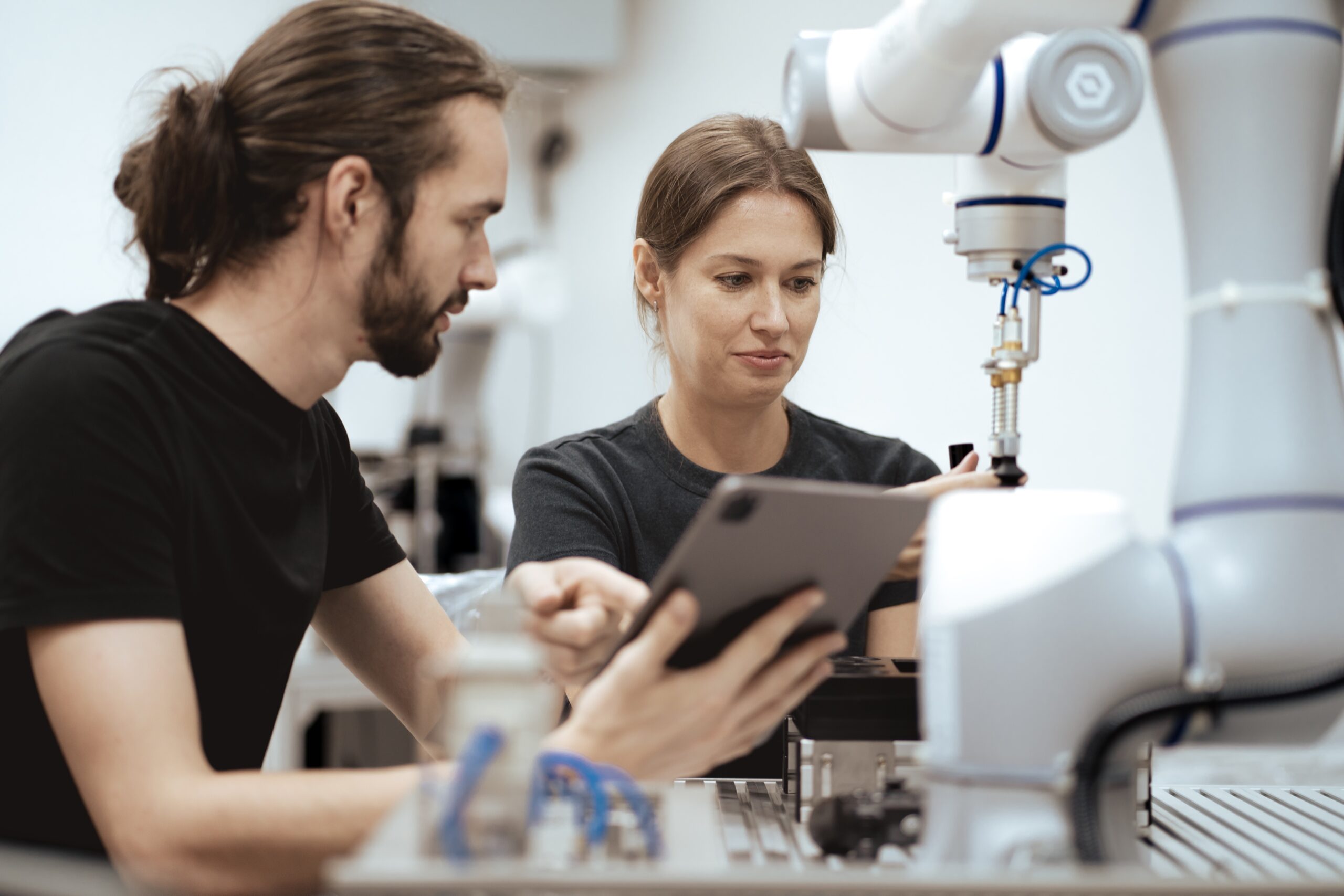
- Collaborative robotics: Embracing the concept of human-robot collaboration (HRC), PENELOPE integrates collaborative robotics into manufacturing workflows. These robots are designed to work alongside human operators, assisting with repetitive or physically demanding tasks while ensuring safety and efficiency in the workplace.
- Augmented reality (AR) interfaces: AR interfaces play a pivotal role in the project’s worker-centric approach by providing intuitive and immersive tools for task guidance, training, and troubleshooting. Through AR-enabled devices such as smart glasses or handheld devices, workers can access real-time information, visualisations, and interactive instructions, enhancing their decision-making and problem-solving abilities on the shop floor.
- Digital twin technologies: Leveraging digital twin technologies, the virtual replicas of physical manufacturing systems enable workers to simulate, monitor, and optimise production processes in a digital environment. These digital twins facilitate proactive maintenance, predictive analytics, and scenario-based simulations, empowering workers to make informed decisions and improve operational efficiency.
- Human-machine interfaces (HMIs): The development of user-friendly HMIs bridge the gap between human operators and complex manufacturing machinery. These interfaces feature intuitive controls, ergonomic designs, and customisable layouts to streamline interaction between workers and machines, enhancing productivity and reducing cognitive load.
By integrating these worker-centric tools into manufacturing environments, the aim is to empower workers with the knowledge, skills, and technologies needed to thrive in an increasingly digitised and automated industry. This approach not only enhances operational efficiency and product quality but also fosters a collaborative and inclusive workplace culture where workers play a central role in driving innovation and success.
Early Adopters Programme
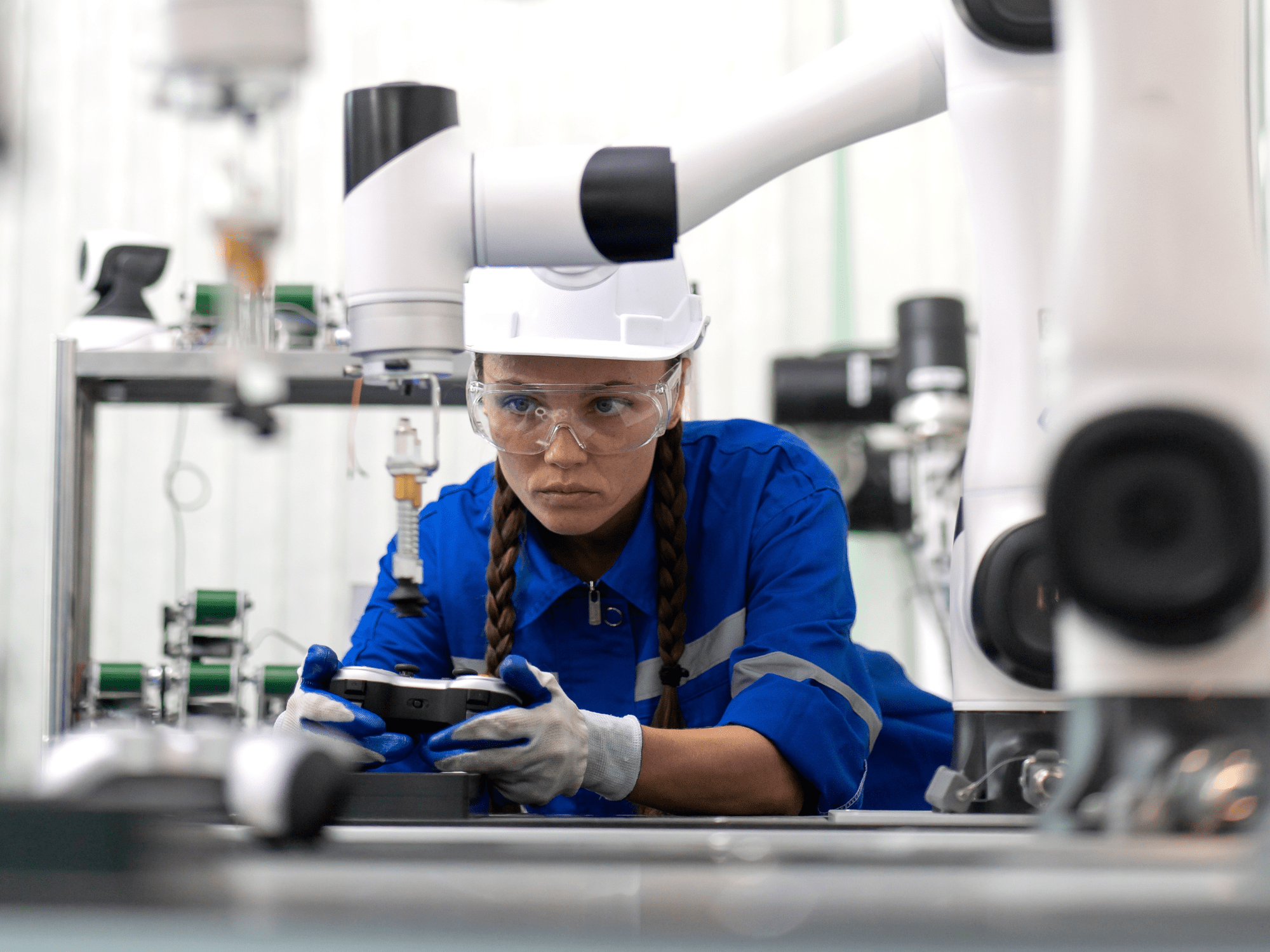
As part of its training ambition, PENELOPE has now launched its Early Adopters Programme, which opens up each of the project’s six didactic factories to companies from across sectors to gain an understanding of the transformative potential of industry 4.0 and ZDM. The project has crafted a range of packages that encompass both a service and training, expertly implemented across these six organisations. At least six external companies – whether SMEs, mid-caps, or large companies – will have the opportunity to be selected to access one of the packages completely free of charge at AIMEN, LMS, BIBA, Tecnalia, SAMXL, or CEA. This well-curated programme aims to empower companies to thrive in the digital age.
- At the AIMEN Technology Centre, three packages are on offer, focusing on digitisation and digital twins and also the use of Asset Administration Shells (AAS). Training also focuses on welding defects and inspection, and also the potential advantages of collaborative robots in industrial applications.
- At SAMXL comprehensive training sessions focused on Robotics Operating Systems (ROS), a pivotal tool in the realm of robotics development, are on offer. Participants will gain insights into the integration of ROS in manufacturing processes and its applications for digital thread functionalities. There are also specialised courses in large workspace, high-precision robotics.
- At TECNALIA, the courses focus on hand-guiding robotics demonstrating how workers are able to co-manipulate large parts using robots. Participants will do practical tests and industrial case studies, while TECNALIA will also showcase its Cable-Driven Robotics service for automating operations over large indoor or outdoor workspaces.
- The LMS didactic factory is offering VR Training for complex manual processes and human-robot collaboration, which provides operators with a safe and immersive environment for training in manual tasks and human-robot collaboration. The programme also introduces Augmented Reality (AR) and Virtual Reality (VR), showcasing their practical applications in manufacturing.
- At BIBA, immersive technologies, digitisation, and collaborative robotics are the focus, with the TELEGON software demonstrator aiming to simplify the complexities of Industrial Internet of Things (IIoT) while maintaining flexibility across hardware platforms. Participants will gain hands-on experience with TELEGON, exploring its applications in automated design and robotic welding.
- CEAServices is a leading provider of industrial training solutions and is also part of the programme offering innovative training methodologies focusing on immersive experiences and collaborative robotics. Participants will learn to interact with robots in industrial settings, gaining practical skills that are essential for success in modern manufacturing environments.
The Early Adopters Programme is open between May 6th and June 21st, 2024. Use the following link to apply: https://bit.ly/3QmkuD8